
6 min read
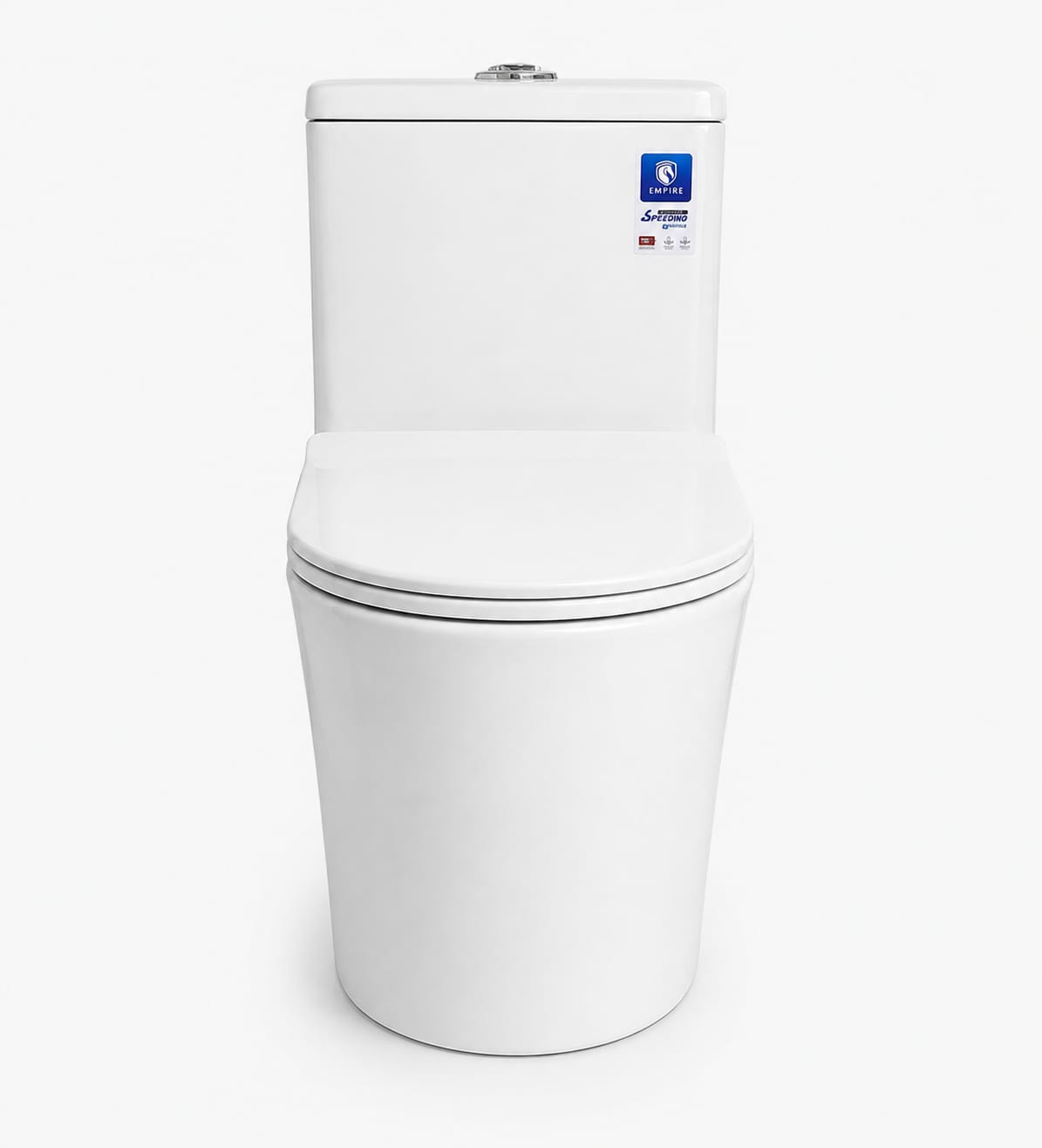
A two-piece commode has a separate tank bolted onto the bowl. It's the cheaper, more widely available format, and the one plumbers can source spare parts for most easily if something needs replacing years later. A one-piece commode is moulded as a single unit, which removes the seam between tank and bowl where grime and limescale tend to collect.
Cleaning is the main practical difference: a one-piece's seamless underside genuinely takes less scrubbing over time, but a two-piece's exposed tank bolts are not a serious drawback for most households. It's a real but modest convenience upgrade, not a hygiene necessity.
Price gap is usually noticeable. A one-piece typically costs meaningfully more than a comparable two-piece for the same flush mechanism and water rating, so it's worth deciding whether the seamless look and easier wipe-down is worth that premium in your specific bathroom, versus spending the difference elsewhere in the renovation.
Space and plumbing: two-piece units are more forgiving of minor trap-distance mismatches during installation since the tank and bowl have some independent tolerance; one-piece units are typically a more exact fit to standard rough-in dimensions, which matters more in an older bathroom with a non-standard outlet position.
Key takeaways
- One-piece is easier to clean at the tank/bowl seam, not fundamentally more hygienic
- Expect a real price premium for one-piece over a comparable two-piece
- Older bathrooms with a non-standard trap position may fit a two-piece more easily
Have a question specific to your home?
Send us your details and we'll answer in plain language, not a sales pitch.